Most engineering blogs feel sterile. They are polished, corporate-approved, and frankly, unoriginal. They talk about “best practices” in a vacuum.
But code doesn’t happen in a vacuum. It happens in the real world.
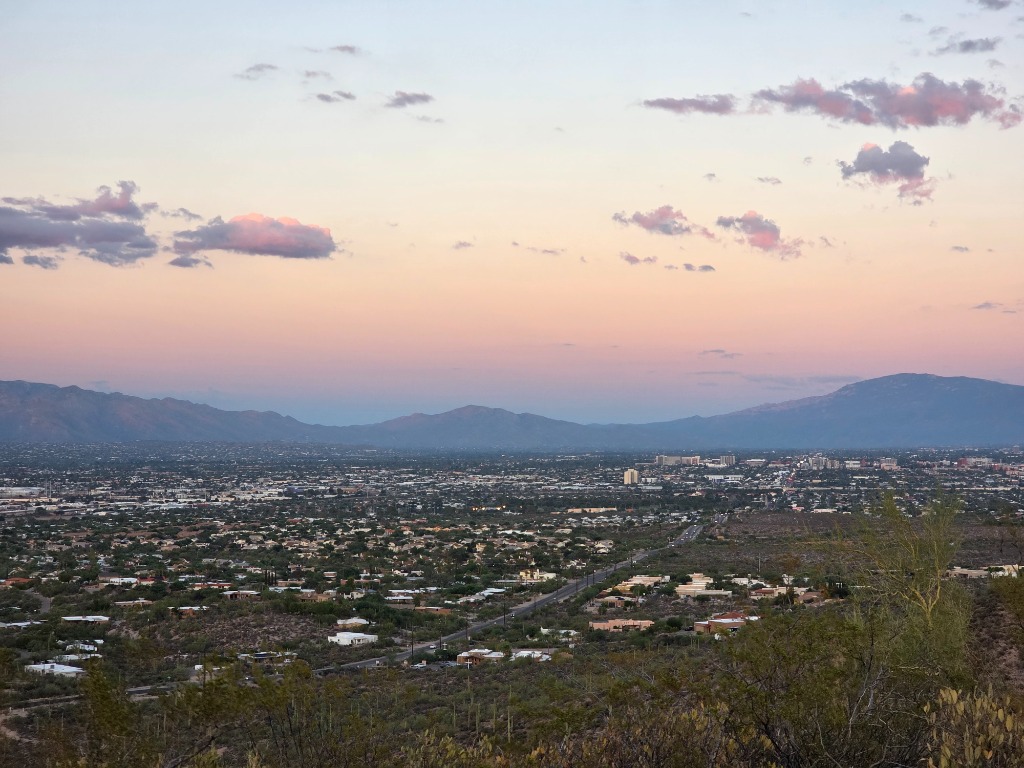
For me, that world is the west side of Tucson, somewhere between the Painted Hills and Starpass. It’s a landscape defined by resilience—saguaro ribs, rocky trails, and blindingly clear skies. It is raw, and it is honest.
That is the energy I am bringing to this site. This isn’t just another “Hello World” post; it’s a statement of intent.
The Shift: From Editor to Orchestrator
I have spent years specializing in scalable backends, Kotlin microservices, and the heavy lifting of Azure. But the industry is shifting, and my role is shifting with it.
I am no longer interested in just writing the code. I am positioning myself to orchestrate it.
To me, Backend and Frontend are becoming implementation details. The distinction is fading. The future belongs to the Software Architect who can manage a swarm of AI agents to achieve an engineering goal.
I don’t want to live in the text editor anymore; I want to live in the orchestration layer—managing prompts, contexts, and validation loops instead of syntax.
Why This Stack? (Astro + Google Antigravity)
You might wonder why a backend engineer dealing with heavy industrial systems is spinning up an Astro site.
I chose this stack because it represents the workflow of the future: AI-Native and Cloud-Based.
I built this utilizing Google Antigravity. I wanted to break the tether to the local machine. I wanted an environment that feels like “Antigravity”—where environment config, port forwarding, and dependency hell just float away, leaving only logic.
This workflow allows me to move fast. It allows me to treat the entire stack—database, API, UI—as a single malleable resource that I shape, rather than distinct silos I have to manually cobble together.
The “Techie in Tucson”
There is a parallel between the software I build and the city I live in.
At my day job with Komatsu, we safeguard machines that move literal mountains. That heavy industrial reality mirrors the landscape I see out my window.
Out here on the trails near St. Mary’s and Greasewood, nature demands that same reliability. You don’t survive the desert by being flashy; you survive by being efficient and robust.
That is the ethos of this blog.
- No fluff.
- No hype.
- Just raw, architectural thinking.
Whether I’m biking the loop at Starpass or architecting a microservice mesh, the goal is the same: Build something that lasts, and don’t fear the heat.
Welcome to the desert. Let’s build.